I’m That Nurse: A Designer’s Review
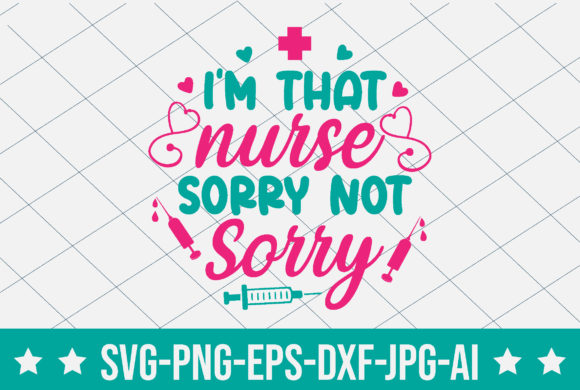
As someone who has spent years translating digital concepts into thread, I approach every new machine embroidery design with a mix of curiosity and caution. We have all seen the trend of bold, attitude-driven text designs flood the market, but few translate well from screen to fabric. When I first opened the files for I’m That Nurse Sorry Not Sorry, my immediate goal was not just to admire the typography, but to determine if this graphic could withstand the physical realities of stitching. This is not just a cute phrase; it is a statement piece that needs to look professional on everything from a nurse’s scrub cap to a high-end tote bag.
First Impressions and Visual Personality
The mood of this design is unapologetically confident. It captures the resilience and humor essential to the nursing profession without relying on clichéd medical symbols like stethoscopes or hearts. Visually, the layout feels balanced, with a strong typographic hierarchy that draws the eye immediately. For an embroidery project, this is crucial. If the letters are too thin or the spacing too tight, the design loses its impact once the needle hits the fabric.
What stands out is the potential versatility. While listed under T-Shirt Designs and Graphics, this piece transcends simple apparel. It has the structural integrity to work as a focal point on larger surfaces or a subtle accent on smaller items. The clean lines suggest it would pair beautifully with a satin stitch border or a dense fill stitch background, depending on the desired texture. However, the simplicity also means there is little room for error in digitizing. Every curve and corner must be sharp to maintain that "sorry not sorry" edge.
Real-World Application: The Custom Tote Test
To truly evaluate this design, I imagined a specific client scenario: a boutique shop owner wanting to create a line of durable canvas tote bags for healthcare workers. These bags need to carry heavy textbooks and lunch containers, meaning the embroidery must be robust. Using I’m That Nurse Sorry Not Sorry on a thick cotton canvas requires careful attention to stitch density. If the digits are too sparse, the fabric shows through, looking cheap. If they are too dense, the fabric puckers.
In this context, the design performs well because the letterforms are substantial. They allow for a solid fill that anchors the design to the heavy material. For a handmade product intended for daily use, this durability is key. Customers trust a finished product that looks intentional and sturdy. A flimsy, poorly stitched version of this phrase would undermine the professional image of the nurse wearing it. By contrast, a well-executed version elevates the item from a simple bag to a badge of honor.
Navigating Fabric and Hoop Constraints
Not every surface is as forgiving as canvas. When considering this design for sweatshirt embroidery or baby embroidery on onesies, the approach changes. Stretchy fabrics require a different stabilizer strategy and potentially a lighter touch with the stitch count to prevent distortion. On a curved surface like a cap, the centering of the text becomes critical. The phrase is long enough that it might wrap awkwardly if not scaled correctly for a standard hoop size.
Dark fabrics present another challenge. While the design likely comes in a single color vector format, visualizing it on navy scrubs or black hoodies requires high-contrast thread choices. A bright white or neon thread would make the graphics pop, but you must ensure the underlying structure supports such bold colors without bleeding. Always test on scrap fabric first. Check how the thread colors interact with the fabric texture. A fuzzy fleece will swallow fine details, so you may need to simplify any intricate serifs or small decorative elements if they exist in the source file.
Technical Considerations for Sellers
For Etsy sellers and craft business owners, understanding what you are buying is vital. The product description states you receive a .zip file containing SVG, PNG, EPS, DXF, and JPEG files. It is important to note that these are primarily graphic formats. SVG and DXF can often be imported into embroidery software to be auto-digitized or used as a reference for manual digitizing. However, they are not native embroidery files like PES or DST. This means you, the designer, have control over the final stitch output. You can adjust the running stitch paths, modify the applique design layers if you choose to add them, and optimize the stabilizer requirements based on your specific machine.
This flexibility is a double-edged sword. It allows for customization, such as resizing for a small embroidered patch or expanding for a large blanket. But it also places the responsibility of quality control on you. Before listing this as a commercial embroidery item or a personalized gift, you must digitize it properly. Check the license terms carefully. Just because you have the graphic files does not automatically grant unlimited commercial rights for the embroidered outcome, though many designers allow it. Always verify before selling small shop products or boutique branding items.
Enhancing Brand Value and Customer Trust
Why does this specific design matter for your brand? Because it speaks directly to a community that values authenticity. Nurses are often overlooked, and a design that acknowledges their tough exterior with humor builds immediate rapport. When a customer sees I’m That Nurse Sorry Not Sorry stitched cleanly on a tote bag design or a holiday embroidery gift, they see quality. They see that the maker cares about detail.
Use this design to create cohesive design assets for your portfolio. Create printable mockup previews showing the design on various items—scrub caps, aprons, pillow covers. Show potential buyers how versatile the digital embroidery file source can be when handled by a skilled hand. This transparency builds trust. It shows you are not just slapping a graphic on a shirt, but curating a custom apparel experience.
Final Verdict and Practical Tips
In conclusion, I’m That Nurse Sorry Not Sorry is a strong contender for your next project, provided you respect the technical demands of embroidery. It is not a plug-and-play solution if you lack digitizing skills, but for those who understand the craft, it offers a fantastic foundation. Remember to inspect small details, confirm hoop size compatibility with your machine, and always run a test stitch. Whether you are creating a wedding gift for a nursing couple or stocking up for a craft fair, this design has the personality to sell. Just ensure your stitching matches its bold attitude.